Living life well is a universal aspiration and so it should come as no surprise that cultures around the world have developed whole concepts on living a ‘snug as a bug in a rug’ life ethos.
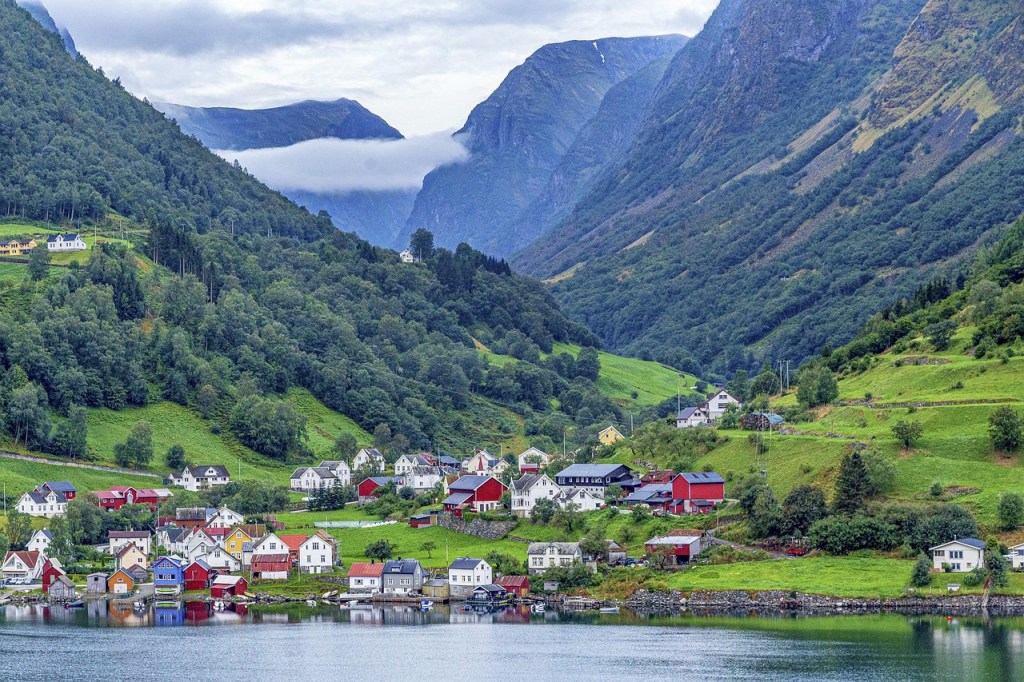
The Danes gave us Hygge and Lykke, the Scandi countries gifted us Lagom and Fika. The Japanese are known for ‘Ikigai’, Uketamo, Kintsugi, Tsundoku and Kaizen. The South Africans have a lifestyle concept called ‘Ubuntu’, the Scottish have Cosagach/Coorie, the Dutch have Gezellig, and the Greek have Meraki.
Choosing from this plethora of life philosophies or at the very least, embracing aspects from one or more, that align with our values and beliefs is more than likely to enhance our lives.
When Covid raged around us, and we took refuge in our homes through multiple lockdowns, we were given the perfect opportunity to Hygge.
Denmark
Hygge
‘Hygge’, (pronounced hoo gah) a Danish lifestyle mantra, which became popular around 2016, was in force globally, as we bunkered down, waiting for the worst of the pandemic to pass. We paused, swaddled under weighted blankets, spent quality time with family and close friends and focused on cozying our corner of the world, a safe distance from the onslaught of a once in a century pandemic.

We curled up in warm throws, savored comforting and nutritious food, scheduled physical activity, read mentally stimulating books and feasted our visual and auditory senses on satisfying movies. We made Hygge a priority.
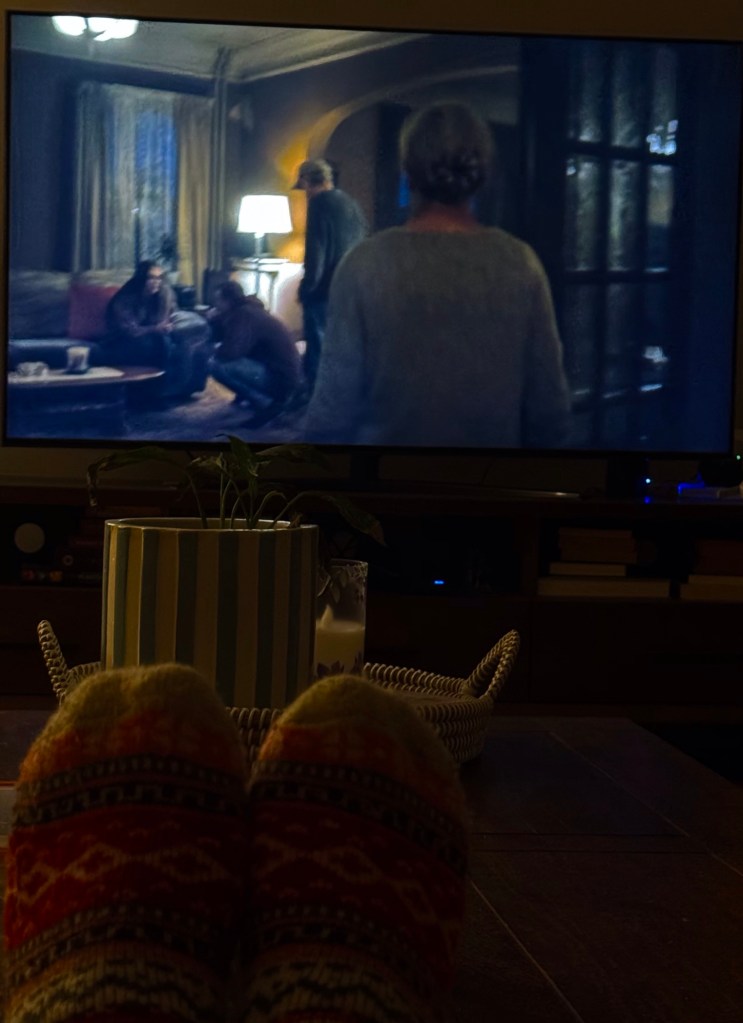
Hygge could also be the perfect antidote to seasonal affective disorder (SAD) during cold wintry days. It conjures up images of cozy blankets, cashmere sweaters, merino wool socks to keep our tootsies warm, crackling fireplaces, hot chocolate drinks, jam doughnuts and flickering candles. In essence it promotes connectedness.
Lykke
The Danes are a happy bunch as we have them to thank also for the lifestyle philosophy of ‘Lykke’ (pronounced Loo-kuh) which translates to ‘happiness’ . This contrasts with Hygge which means coziness, and is a far cry from living la vida loca 😁.
The main ingredients of the Lykke life are:
- Connectedness – spending quality and quantity time together with family and connumity.
- Money to meet basic needs only – not obsessing over wealth and buying experiences not things.
- Work-life balance is important – the Danes work a 33 hour week on average.
- Health – it is something the Danes do consistently given they cycle practically everywhere.
- Kindness – giving to those less fortunate & generally being kind.
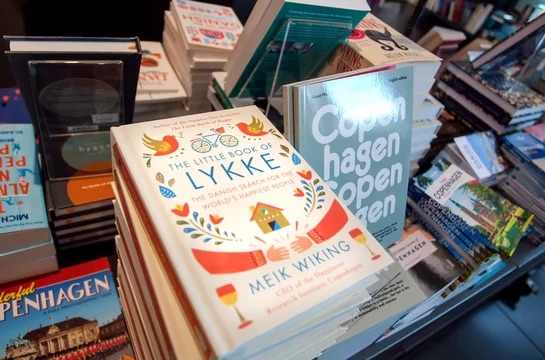
If Hygge and Lykke have worked for the Danish people, widely considered to be some of the happiest people in the world, it should logically follow that these and their counterpart concepts would deliver the same dose of joy to the rest of us.
Whilst for many, living well seems to be about excess, for an increasing number of us, it is the exact opposite – conscious living, valuing quality over quantity and finding balance. Leaning towards connectedness, cozying one’s home, looking out for and after each other, valuing experiences over acquiring things has taken on even more significance in a post pandemic world.
I was on holiday in an idyllic location some months ago where the emphasis was on slowing down, turning off technology, soaking up nature, meditating, eating simple nutritious food and recovering from a common modern life malady of sleep deprivation. During one of the sit down meals, I overheard one holidayer tell another about a family business that was sold for a good profit, about working for the new owners of the business, about other investments and assets and about going on holidays. The conversation centered on things, money and on ‘more’, wanting more, doing more, acquiring more.
Scandinavia
Lagom and Fika
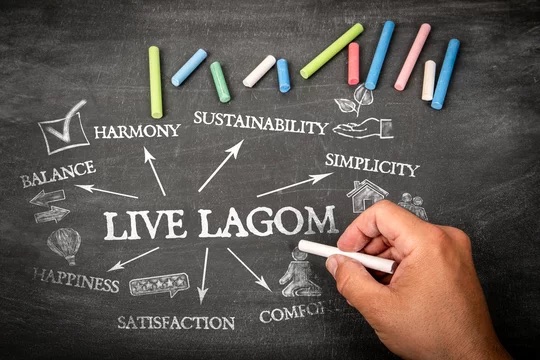
Fortunately, the enlightened amongst us, have the Swedish life philosophy of ‘ Lagom’ to ground us.
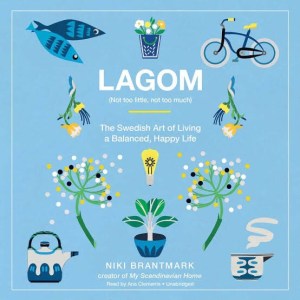
‘Lagom’ (pronounced Lah-gum) is a Swedish word that means ‘just the right amount’. Drawing from ancient Greek, Hindu and Buddhist teachings and wisdom, it promotes the idea of balance and appreciating ‘enough’ as opposed to constantly craving more.
‘Not too little, not too much’, can be applied to all aspects of life – from sleeping, to using technology and from fashion to house decorating, landscaping and recreational pursuits. The mindset of contentment, balance and “good enough” is about enjoying the small and simple things in life in moderation.
According to journalist and author, Helen Russell (The art of happiness: The global secrets on how to be happy, 2018), Lagom can be traced back to the Vikings where the Swedish word lag means team. Laget om, which means ‘around the team’ was used by the Vikings when they passed around a horn filled with mead, so that everyone drank just enough. Laget om later evolved to Lagom and is quite a cultural fixture in Sweden and the world over.
Jessica Bennett (2022), states that “Although lagom isn’t specific to the home, the ethos is instrumental in creating the cozy, uncluttered look that distinguishes Scandinavian style. A lagom home occupies the sweet spot between minimalism and maximalism, encapsulating just enough of what you love to spark happiness and inspire calm.” Bennett, J, goes on to outline seven ways to incorporate Lagom into one’s home to strike good balance. These include:
- Declutter
- Establish a background of neutral tones
- Make carefully considered purchases
- Incorporate a feature wall
- Use walls for storage
- Decorate with repurposed items
- Surround yourself with items that spark joy (reminiscent of Marie Kondo).
Another term we can thank the Swedes for is ‘Fika’, whose literal translation is “to have coffee” and is a part of the Lagom concept. There are interesting versions on the origins of ‘Fika’. One version is that it is “an anagram for “coffee” (“kaffe” in Swedish). It’s also said that it comes from the nowadays not very used adjective “fiken”, which means to have a craving or be in the mood for something (accessed from ‘destinationuppsala.se’, 28 July, 2024).

Moving away from the European continent, we turn our attention to the land of the rising sun, Japan, that has produced a latticework of lifestyle concepts, namely, Ikigai, Uketamo, Kintsugi, Tsundoku and Kaizen.
Japan
Ikigai
“Ikigai (ee-key-guy) is a Japanese concept that combines the terms iki, meaning “alive” or “life,” and gai, meaning “benefit” or “worth.”
When combined, these terms mean that which gives your life worth, meaning, or purpose.
Ikigai is similar to the French term “raison d’etre” or “reason for being.” (Gaines, J, 2020).
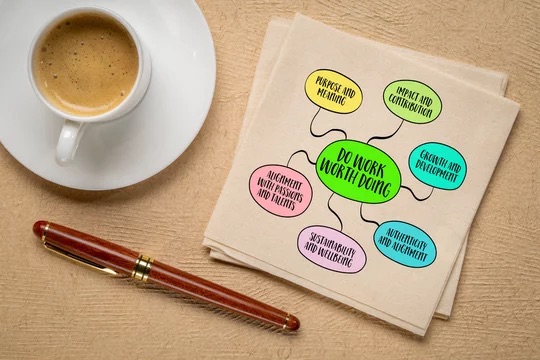
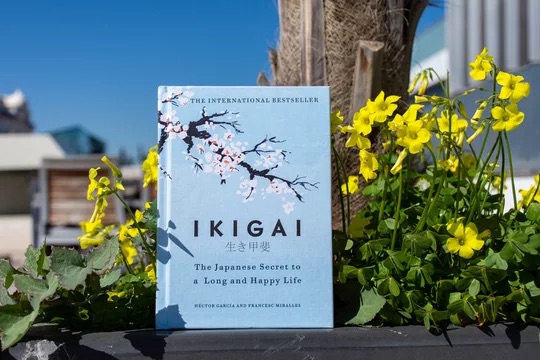
Hector Garcia is co-author of the best selling book Ikigai: The Japanese Secret to a Long and Happy Life, which helped catapult ‘ikigai’ from relative obscurity into the limelight. When Garcia interviewed more than 100 elderly residents of Ogimi Village, Okinawa Prefecture, he found that what these healthy and active older folk had in common was an ikigai, or something worth living for.
Their ikigais ranged from playing a musical instrument to dancing, gardening and art. According to Garcia, the inhabitants of this “village of longevity”, know what the source of their zest for life is, and are busily engaged in it every day (accessed from japan.go.jp, 29 July 2024).
Garcia noted that this community of elders have strong social links with their peers and frequently come together to enjoy karaoke, birthday parties, and more. They take great strides to avoid social isolation which in turn links to the motivation and confidence they have to lead active lives (accessed from japan.go.jp, 29 July 2024).
Garcia reckons that Marc Winn’s Venn diagram included in his book and that illustrates the 4 categories of Ikigai – 1) what you love, 2) what the world needs, 3) what you can be paid for and 4) what you are good at can help one arrive at one’s Ikigai. If one enjoys baking, and does it very well, it could become a career, give the world a product it needs and be paid well for it.
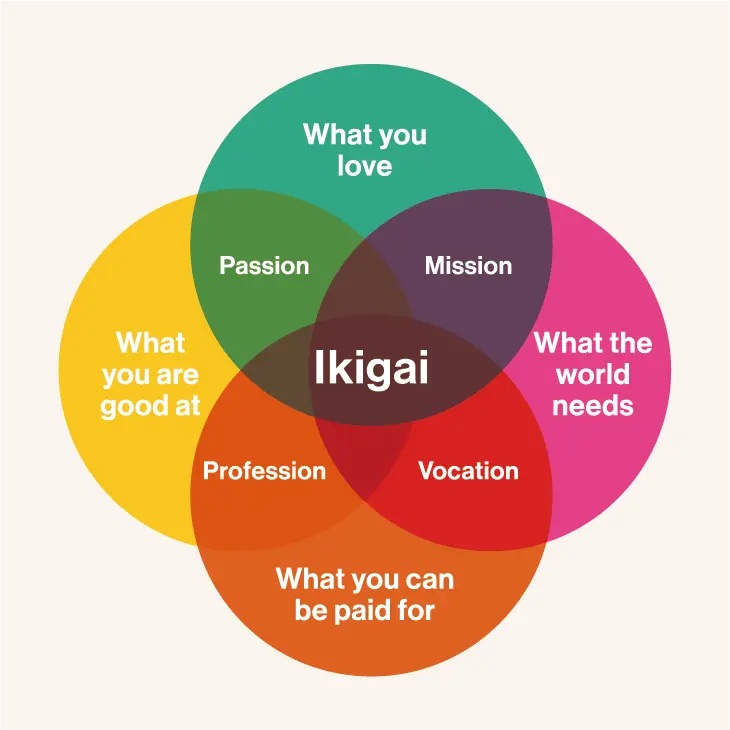
J K Rowling’s passion and skill at story telling gave the works the Harry Potter character in books which then got turned into movies. Her extraordinary talent at storytelling has enthralled and entertained children and adults alike. Her talent made her wealthy. Her ikigai of storytelling is her amazing legacy.
Oprah Winfrey’s ikigai is to interview people in a way that helps them share their life stories, experiences and wisdom that serves to inform, enlighten and entertain. She puts her guests at ease and is a master at hosting some of the most magnificent minds in the world. She has made a good living out of this mastery and the world has benefited from her enormous talent, generosity, warmth and wisdom.
Uketamo
A little mountain region in Northern Japan, called the Dewa Sanzan, has been established as a training ground for the Yamabushi. The Yamabushi are monks who have trained in the austerities in the mountains for over a 1000 years. In the 3 mountains that comprise Dewa Sanzan, the powerful philosophy of Uketamo took shape over thousands of years.
“The philosophy Uketamo (oo-keh-ta-moh),means “I humbly accept with an open heart” and it’s a Japanese Wabi Sabi philosophy we should all live by. (Kilroy, 2024)”
“Being able to accept things for what they are, and just as importantly yourself for who you are, is an important part of what it means to live well” (Bunting, 2023).
Bunting (2023) asserts that Uketamo is what you do when you need a reminder to be in the moment.
“It’s what you do when you’re under a waterfall and the weight of the water is crushing down on you” and it is about “accepting your place in the world, accepting your current self for who you are, warts and all, and about knowing that in a lot of situations, for better or worse, it’s all you can do (Bunting, 2023).”
Kintsugi
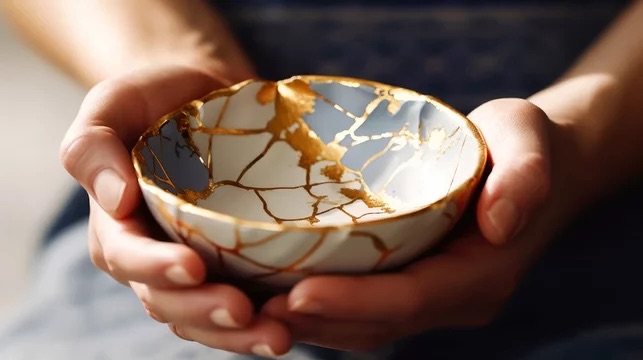
Kintsugi literally translated means golden joinery. It is the art of repairing broken pottery with gold often making broken pieces even more beautiful than before.
Risner (2022) in quoting Wolf (2020), says
“The story of kintsugi—this style of pottery—may be the most perfect embodiment of all our trauma-shattered lives… Instead of throwing away the broken beloved pottery, we’ll fix it in a way that doesn’t pretend it hasn’t been broken but honors the breaking—and more so, the surviving—by highlighting those repaired seams with gold lacquer. Now the object is functional once again and dignified, not discarded. It’s stronger and even more valuable because of its reinforced, golden scars.”
Tsundoku
I like books, really really like books. I buy books with the intention of reading them, but often they sit on a bookshelf never having been finished or in some instances even started. I just described Tsundoku.

0The origin of tsundoku comes from the Meiji period (1868 – 1912) or perhaps earlier. According to the writer Mori Senzo, the phrase tsundoku sensei appeared in a 1879, representing a teacher who had lots of books but never read them. While this might sound like an insult, the phrase has no pejorative meaning. Indeed, the act of tsundoku can have positive traits.
Crucially, the concept is different from bibliomania, which is the unfettered collection of rare books like first editions. Tsundoku has intentionality behind it. It’s the awareness of gathering books and finding a home for them or of reading them in the future. It’s not hoarding for the sake of hoarding or collecting for the sake of collecting (Yamato magazine, 2024).
My book collection unlike the photograph below, is neatly stacked and displayed on bookshelves and the colourful spines enthrall me. I feel a sense of joy when I pick up a book to discover its hidden secrets.

Chris Kincaid’s (2020) assessment is that “Tsundoku points to a strange view we have toward information. We often view it as a property to consume or hoard, as if information is somehow limited in supply. But it is partially right. After all, some books fall out of print and their information becomes lost. Tsundoku points to the joy of discovery and not wanting to spoil the fun of the unknown inside of a book. I’ve stared at an old book wondering what goodies hid inside it–illustrations, stories, and knowledge. Reading the book ends the anticipation and the joy that brings. Tsundoku captures the joy books as an object can bring. After all, the books people collect shows their interests and the gaps in their knowledge. A book collection shows concerns, doubts, fears, joys, tastes, and who a person is.
Kaizen
My first introduction to Kaizen was at university when I studied about Toyota’s implementation of Kaizen in their car production process.
My second encounter with Kaizen was when I witnessed it first hand in action on the factory production floor in the little town of Toyota whilst on holiday to Japan. I was impressed.
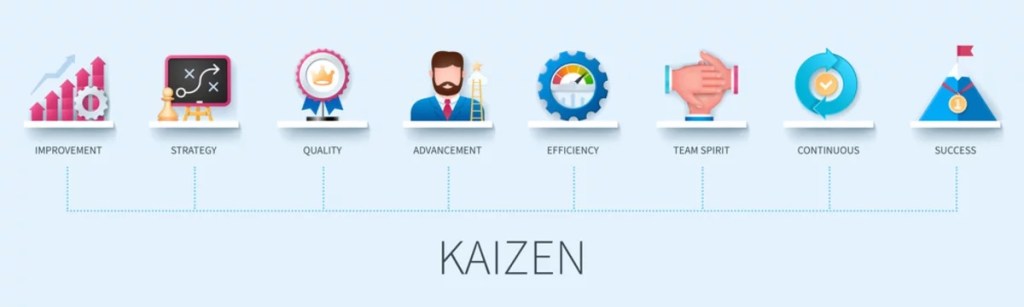
Kaisen means always improving and has become synonymous with Toyota even though they did not invent it.
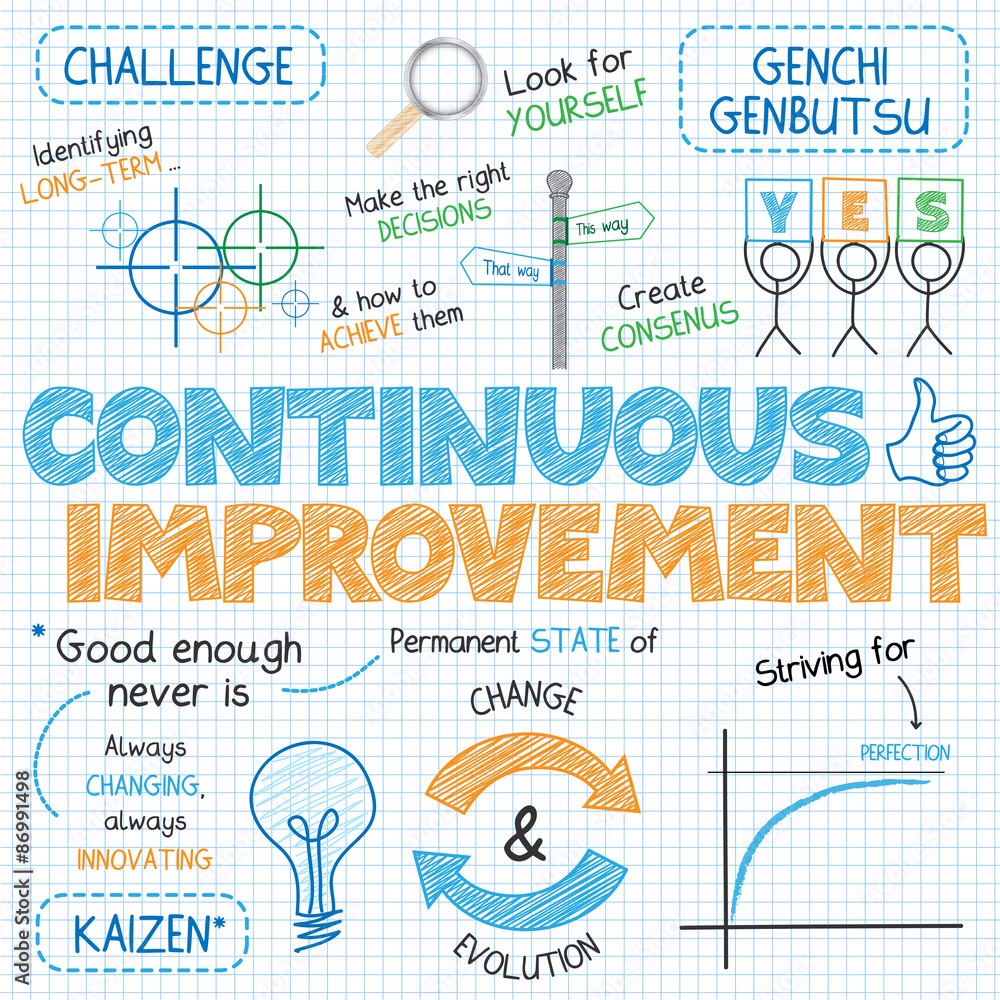
“As a business philosophy, kaizen involves all employees and promotes a mindset where small incremental changes create a significant impact over time. As a methodology, kaizen enhances specific areas in a company by involving top management and rank-and-file employees to initiate everyday changes, knowing that many tiny improvements can yield big results (accessed from safetyculture.com, 29.07.24).
“Considered as the Father of Kaizen, Masaaki Imai globally introduced kaizen as a systematic management methodology in Kaizen: The Key to Japan’s Competitive Success (1986). Today, organizations across different industries adopt kaizen as a part of their core values and practice continuous improvement on a day-to-day basis with concepts from six sigma and lean. It is also used with other analytical frameworks such as SWOT (accessed from Safetyculture.common 31.07.24).”
The following articles shed more light on kaizen:
- https://www.spica.com/blog/kaizen-method
- https://safetyculture.com/topics/kaizen-continuous-improvement/
- https://evomalaysia.com/2019-how-toyota-perfected-car-making-with-kaizen
Scotland
Cosagach/ Coorie
Cosagach or Coorie is Scotland’s answer to Denmark’s Hygge. Britton (2017) states that “Scotland is a country where cosagach can be achieved in all seasons, but it’s winter when it comes into its own.” The word cosagach (pronounced kos-ah-gogh) is an old Gaelic word that describes feeling sheltered and cozy.
During winter time, coorie is most evident with the Scots cozying up with scented candles, a book and hot drink in hand near a roaring fireplace.

There is some conjecture about the etymology of the word cosegach. Native Gaelic speakers assert that cosagach means wet moss instead of coziness.
Còsagach also fits in with other international ideas and ways of life like ‘wabi-sabi’, ‘ikigai’, and ‘gezelligheid’, which all have a huge impact on interior design.
The main features of cosagagh in interior design are:
- A roaring fireplace
- Basking in the outdoors.
- Interiors that incorporate a lot of stone and wood.
- Soft neutral colours for interiors.
The Netherlands
Gezellig
The Dutch like all things gezellig. It is central to Dutch culture and is pronounced heh-sell-ick.
The word Gezellig does not have an English equivalent. It signifies cozy, quaint and nice. It can also describe togetherness or catching up with family and friends.
There is Gezellig and the opposite of it known as onGezellig.
Examples of gezellig and ongezellig are:
Having a meal at a gezellig restaurant with gezellig friends.
Being taken to the emergency room is ongezellig.
Travelling is gezellig, experiencing turbulence when flying is ongezellig.
Being sick is ongezellig, being taken care of is gezellig.
The Dutch are quite gezellig and will always make time for it in its various forms.
Greece
Meraki
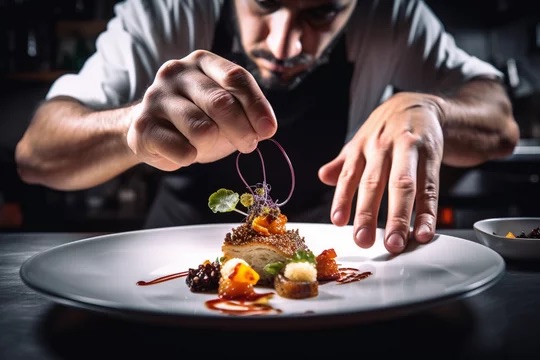
Meraki (pronounced Mey-rah-kee), is a Greek verb meaning to do something with soul, creativity or love and to put something of yourself into your work.
Even though it has become somewhat cliched to say you never work a day if you love what you do, its validity cannot be denied.

Meraki is about immersing oneself in one’s work passionately and wholeheartedly and leaving a part of oneself in it.
A painter creates a visual masterpiece, an interior decorator designs beautiful, cozy and inviting living spaces. A potter produces stunning pottery and a teacher imparts knowledge and shapes minds of all ages. A chef conjures up mouthwatering degustation menus. They have exercised their meraki.
Africa
Ubuntu
Rounding up these fascinating lifestyle philosophies is Ubuntu pronounced [ùbúntú], which is a traditional African concept. The word ubuntu comes from the Zulu and Xhola languages, and can be roughly translated as “humanity towards others.” Ubuntu embodies all those virtues that maintain harmony and the spirit of sharing among the members of a society. It implies an appreciation of traditional beliefs, and a constant awareness that an individual’s actions today are a reflection on the past, and will have far-reaching consequences for the future. A person with ubuntu knows his or her place in the universe and is consequently able to interact gracefully with other individuals. One aspect of ubuntu is that, at all times, the individual effectively represents the people from among whom he or she comes, and therefore tries to behave according to the highest standards and exhibit the virtues upheld by his or her society (accessed from new world encyclopedia.org).
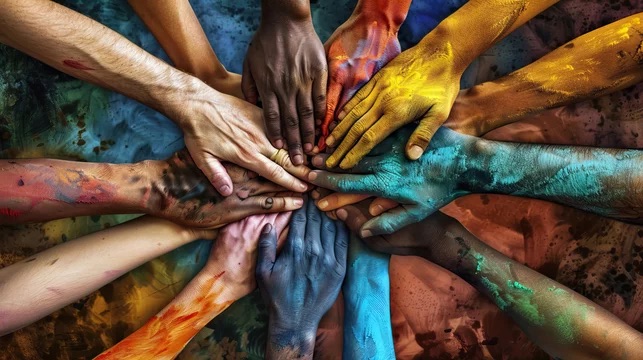
This beautiful life philosophy that came from the Nguni people of South Africa translates into I am because we are.
Having explored a smorgasbord of lifestyle concepts, I guess I would conclude by answering my original question by saying that I would unequivocally live the Lykke life over La vida loca.


 April’s Musingz
Leave a comment